Second price tag
The number on the tag rarely covers a rideable everyday bike. Fenders, a rack, lights, a lock and replacement tyres form a second purchase that is worth adding up before you commit to the first.
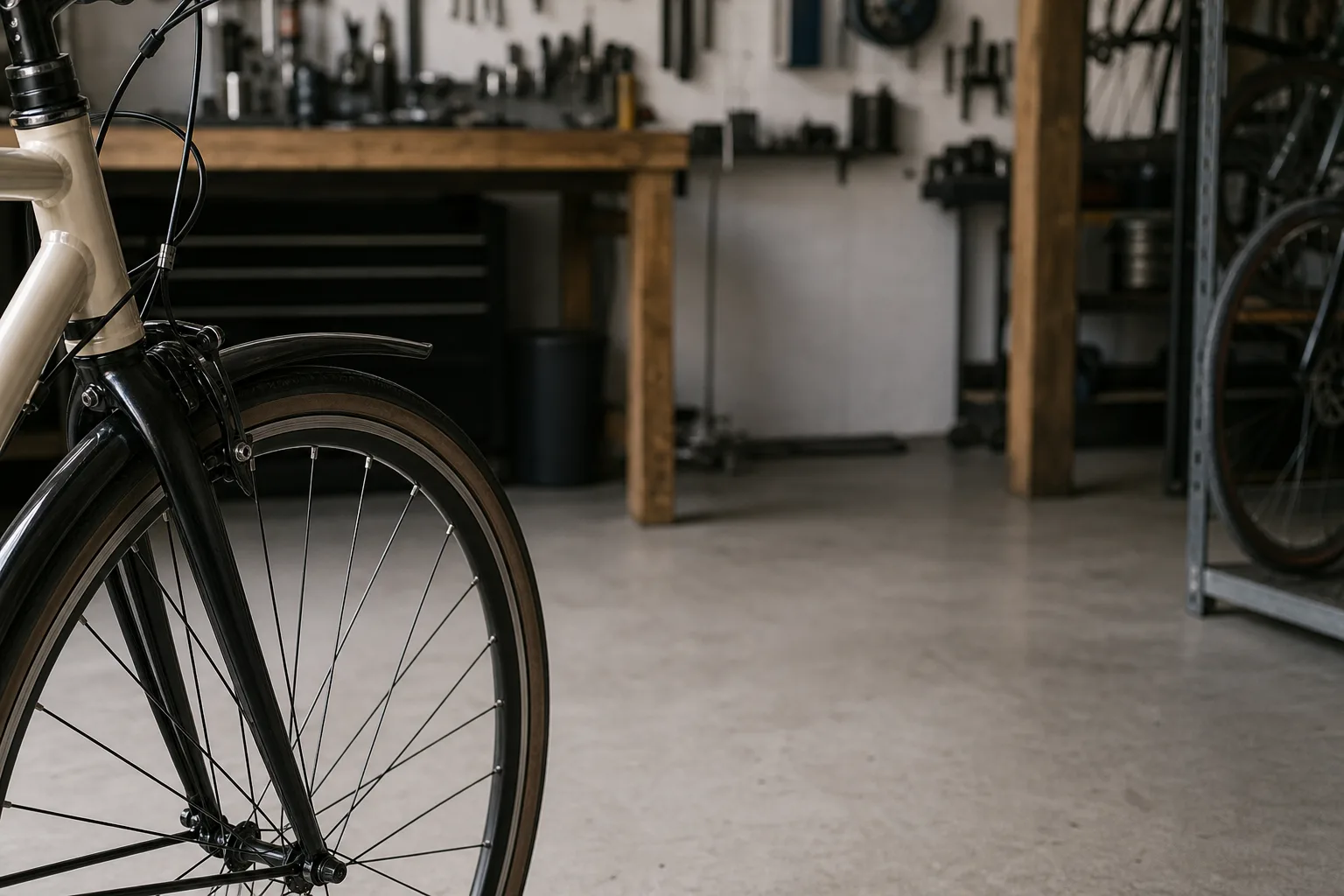
Fenders, a rack, lights, a kickstand plate and tyres add up fast on a bare commuter, and one gearing choice matters more than all of them.
The price on the tag buys a frame, wheels, a drivetrain and a saddle, and on most commuter-shaped bikes that is genuinely all it buys. Everything that makes the bike usable in February at six in the evening with a bag of groceries on the back is a separate purchase, fitted separately, often by someone charging shop labor. A careful buyer works out that second number before agreeing to the first, because the additions are not optional in practice and the frame you choose determines how cheaply they go on. Here is where the money actually lands.
Clip-on fenders exist because frames without clearance and eyelets still need something, and they do keep the worst of the stripe off your back. They do not keep your feet dry, they do not protect the drivetrain, and they rattle. Full-coverage fenders, mounted on stays and running low at the front, are a different product entirely: they cost more, they need clearance the frame either has or does not, and fitting one properly takes an hour of fiddling with stay length and bolt spacing. What a careful reader checks, standing in the shop, is the gap between tyre and fork crown and whether the frame has fender mounts at the dropout and the bridge.
Rear racks are cheap. Rear racks on a frame with no eyelets are not, because the workarounds (seatstay clamps, P-clips, adapters that hang off the quick release) all move load away from the frame and into a fitting that was never meant to carry it. They work, and plenty of riders run them for years, but they limit what you can put on the rack and they loosen. Check for two things: threaded eyelets at the rear dropout, and a second pair up on the seatstays. A frame with all four is worth real money to you later.
Rechargeable lights are the obvious answer and mostly the right one, at least at first. They are inexpensive, bright, and easy to move between bikes, and the failure mode is a flat battery on a Tuesday, which is annoying rather than dangerous if you carry a spare. A dynamo hub costs more than the lights it powers, usually needs a wheel built or bought around it, and then never asks anything of you again. If your commute is genuinely year-round and genuinely after dark, the arithmetic turns in about the second winter. The Consumer Product Safety Commission oversees the reflector and equipment requirements bicycles ship with, which is worth knowing when you decide what to keep on the bike and what to replace.
A kickstand plate is the flat welded tab behind the bottom bracket that a center-mount kickstand bolts to, and a bike either has one or it does not. Without it you are back to clamp-on stands, which mark chainstays and slip. It sounds trivial until you are holding a loaded bike upright against a wall with one hand while unlocking with the other. The same category covers bottle bosses, a chainstay protector, better bar tape or grips, a bell, and a lock heavy enough to be worth buying. None of these is expensive alone. Together they are a real line item.
Stock tyres on an inexpensive bike are chosen to hit a price and a weight, and they are usually narrower, thinner and less puncture-resistant than a daily commuter wants. Most riders swap them within the first season, with the original tread barely touched, which means budgeting for tyres twice. Buy for the worst surface you ride, buy the puncture belt, and accept the weight.
Loaded, on a real hill, in the rain, none of the additions matter as much as whether the bike has a gear low enough to spin up in. Look at the smallest chainring and the largest rear cog before anything else, because that ratio is expensive and awkward to change later and cheap to get right at purchase.
Price the whole bike, meaning the one you will actually be riding in six months, and let the frame's mounts do the arguing.
The number on the tag rarely covers a rideable everyday bike. Fenders, a rack, lights, a lock and replacement tyres form a second purchase that is worth adding up before you commit to the first.
Before buying, look at the gap between the tyre and the fork crown and at the chainstay bridge. If a full fender and a slightly wider tyre will not both fit, you are limited to clip-ons for the life of the bike.
A short front fender throws water straight onto your shoes and the bottom bracket. Full-coverage front fenders run low toward the ground, and a mudflap on the trailing edge does more for dry feet than anything else on the bike.
Four eyelets, not two. Threaded eyelets at the rear dropouts and a matching pair on the seatstays let a rack bolt directly to the frame. That combination is worth paying for, because retrofitting a workaround costs money and carries less weight safely.
Clamp-on rack limits. P-clips, seatstay clamps and quick-release adapters do carry a rack, but they transfer load through fittings that loosen and mark paint. Check the manufacturer's weight limit, which is usually well below what a bolted rack will take.
Battery lights in practice. Rechargeable lights are cheap, bright and portable between bikes, and their weak point is remembering to charge them. Carrying a small backup light in a bag removes the only real drawback.